Any discussion about a Netherlands vs Tunisia “final group game” at the FIFA World Cup 2026 has to start with a reality check: official groups and fixtures depend on qualification outcomes and the final draw. That said, it is still possible to make a grounded, evidence-based case for why the Netherlands would be strong favorites if they face Tunisia in a decisive last group match.
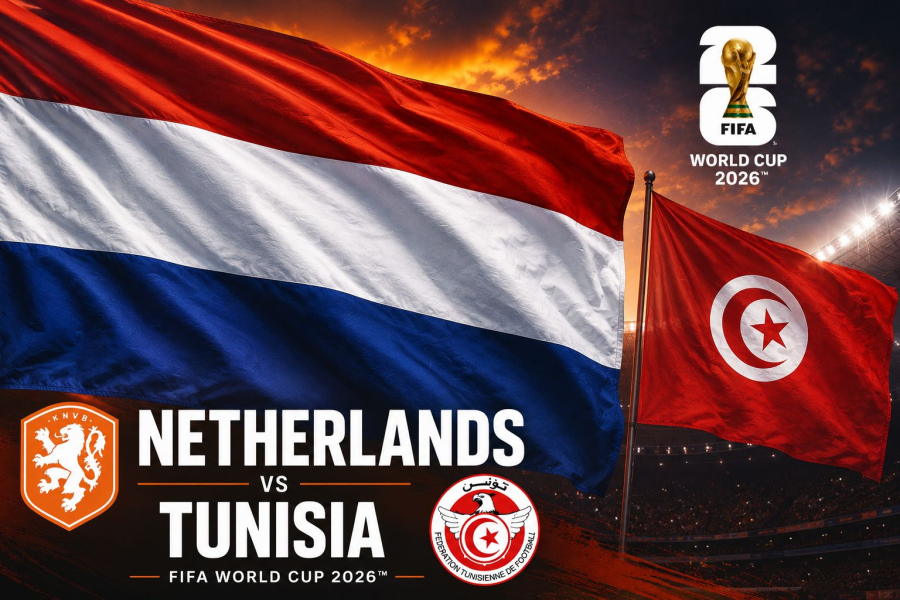
This kind of matchup analysis is useful because it focuses on what tends to decide tournament games: squad depth, tactical flexibility, big-game experience, and the ability to create (and finish) chances under pressure. When you compare those ingredients, the Netherlands typically bring more of them to the table, which is exactly what you want in a high-stakes group closer.
Why the “final group game” context matters so much
The last matchday in a World Cup group is often the toughest moment to deliver a clean, professional performance. Teams are managing multiple pressures at once:
- Qualification math: a draw might be enough, or a win might be required.
- Goal difference: sometimes the margin matters almost as much as the result.
- Stress and fatigue: players have already logged minutes, and nerves are higher.
- Game-state swings: an early goal in another group match can change incentives instantly.
In this environment, “strong favorite” status isn’t just about having better players on paper. It’s about having the tools to manage the match: control tempo, avoid defensive chaos, and still generate reliable goal threat when the opponent sits deep.
The Netherlands are historically built for that kind of tournament management, and that is a major reason they would be expected to handle a Tunisia challenge effectively.
Reason 1: The Netherlands typically bring superior squad depth (a huge edge in game three)
One of the most consistent separators in international tournaments is depth. Not just “bench players,” but credible alternatives who can keep the level high if rotation is needed or if a tactical change becomes necessary mid-match.
In a final group game, depth matters because:
- There may be accumulated fatigue across the squad.
- There may be yellow-card management and risk considerations.
- The opposition may force you into a different shape, requiring specialist roles (for example, extra pace in wide areas or a more defensive midfielder to protect a lead).
The Netherlands have repeatedly produced deep pools of players across top European leagues, especially in positions that decide tight games: ball-playing defenders, progressive midfielders, and forwards who can press and finish. That depth gives them more ways to win, including the ability to improve the team with substitutions rather than simply “holding on.”
Tunisia, by contrast, have often relied on compact structure and collective discipline, which can keep games close, but can be stretched if the favorite can continuously introduce fresh attacking quality late in the match.
Reason 2: Tactical flexibility favors the Netherlands in a must-perform game
Final group matches are rarely predictable. A team may need to start cautiously, then open up, then close down again. The Netherlands are commonly viewed as one of international football’s more tactically adaptable nations, with an ability to shift between:
- Possession control to limit opponent transitions
- High pressing to win territory and force mistakes
- Structured build-up to create high-quality chances
- Game management when leading (reducing risk while still threatening)
This matters against Tunisia because Tunisia’s best path to points in many tournament games is to keep the match low-scoring and deny central spaces. If the Netherlands can vary their attacking routes (wide combinations, half-space entries, third-man runs, and set pieces), they make it harder for a compact defense to simply “hold the line” for 90 minutes.
Put simply: when the opponent’s plan is to limit chances, the most reliable counter is a team that can create chances in multiple ways. The Netherlands are more likely to have those tools.
Reason 3: Chance creation and finishing upside is higher for the Netherlands
When predicting whether a favorite can win comfortably, the key question is not “Will they dominate possession?” It’s: Will they create enough high-quality chances to score early and then control the game?
The Netherlands generally have more attacking profiles that translate well in tournament football:
- Direct runners who can attack space behind a line
- Creative passers who can break compact blocks
- Box presence to convert crosses and cutbacks
- Set-piece threat from quality delivery and aerial ability
Tunisia, on the other hand, have often been at their strongest when games stay tight and they can prioritize structure over open exchanges. That can frustrate opponents for long spells, but it also means Tunisia can struggle to respond if they concede first, especially if the match turns into a “chase” scenario.
Historically, Tunisia have not been a high-scoring World Cup team. In recent tournaments, they have often competed well, but margins have tended to be slim, with goals hard-earned. That’s an important piece of context: if the Netherlands score first, Tunisia may need to take risks that open the game up, which plays into the hands of a deeper, more dynamic squad.
Reason 4: Big-game and tournament pedigree tends to show up in decisive group matches
The Netherlands have a long World Cup history with deep runs, including reaching multiple World Cup finals (notably 1974, 1978, and 2010). Regardless of the specific era, the broader point is consistent: the Netherlands are accustomed to high expectations at major tournaments.
That kind of pedigree can create practical advantages in a final group game:
- Composure under pressure when a result is needed
- Game-state intelligence (when to slow it down, when to accelerate)
- Leadership across the spine of the team
- Confidence to keep executing a plan even if chances don’t fall early
Tunisia bring their own strengths, including strong national pride and a history of competing hard against bigger names. But when you’re assessing who is more likely to deliver a controlled, “professional” win in match three, teams with deeper tournament habits often have the edge.
Reason 5: Set pieces can tilt “tight games,” and the Netherlands often have the profile to win them
World Cup group games are frequently decided by dead-ball situations, especially when one team is compact and the other is probing. Set pieces matter even more in a final group match where nerves can reduce open-play fluidity.
The Netherlands often have advantages that translate into set-piece value:
- Height and aerial power in key positions
- Delivery quality from wide and central areas
- Second-ball aggression around the box
If Tunisia’s plan is to stay compact and concede fewer clear chances, they may still give up corners and wide free kicks. Over 90 minutes, that repeated pressure can add up, either through a direct goal, a rebound, or forcing defensive errors.
Reason 6: The Netherlands can win in more than one “game script”
A reliable favorite is a team that can win regardless of how the game unfolds. In a hypothetical Netherlands vs Tunisia final group match, there are a few common scripts, and the Netherlands are well positioned for each:
Script A: Early Netherlands goal
An early goal changes everything. It forces Tunisia to decide whether to stick to the low block and hope for a single chance, or push more players forward and risk conceding again. The Netherlands’ best-case scenario is exactly this: score early, then control territory and tempo.
Script B: 0–0 at halftime with Tunisia defending deep
This is where depth and patience become decisive. The Netherlands are more likely to have the bench options to raise attacking intensity without losing structure. Late goals are often a product of cumulative pressure and fresh legs, and that tends to favor stronger squads.
Script C: Tunisia scores first
Even in a surprise game state, the Netherlands usually have more routes back into the match: set pieces, long-range shooting, wide overloads, and attacking substitutions. Tunisia’s defensive organization is a real asset, but protecting a lead against sustained pressure for an entire match is a difficult task against high-end opponents.
A quick head-to-head style comparison (what typically decides the matchup)
To keep this grounded, here is a practical, football-first comparison of typical strengths you would expect in this pairing, focusing on factors that influence a last group game.
| Factor | Netherlands (typical profile) | Tunisia (typical profile) | Why it matters in match three |
|---|---|---|---|
| Squad depth | Strong depth across top leagues | More limited depth at elite level | Late-game substitutions can decide qualification |
| Chance creation variety | Multiple attacking routes | Often lower-volume attacking output | Breaking down a low block requires variety |
| Game management | Experience controlling tempo | Often relies on structure and discipline | Protecting leads and closing games is crucial |
| Set-piece threat | Often strong aerially and in delivery | Can defend compactly, but vulnerable to repeated pressure | Dead balls are decisive in tight, nervous games |
| Comfort in high-stakes moments | Long World Cup pedigree | Strong mentality, but fewer deep runs historically | Pressure handling influences execution quality |
How the Netherlands can turn “favorite status” into a comfortable win
Being favored is one thing. Winning comfortably requires execution. Here are the most realistic, repeatable ways the Netherlands could make this matchup look “easy” on the scoreboard.
1) Start fast and force Tunisia into a decision
Against compact teams, tempo is everything. A fast start can lead to:
- an early goal
- more corners and set pieces
- more defensive actions, which can create errors
If Tunisia have to chase, spaces appear. That’s when a deeper squad can punish.
2) Protect against counters with smart rest-defense
Compact defending teams often look for transitional moments. The Netherlands can reduce that threat by maintaining a strong “rest-defense” shape (enough players positioned to stop counters) while attacking.
This is how you keep a match from becoming chaotic. And chaos is usually the underdog’s friend.
3) Use wide play to stretch the block, then attack the box with numbers
When central spaces are blocked, width becomes the lever. Wide overloads can produce cutbacks and second-phase chances. This is one of the most reliable patterns for scoring against deep defenses, especially in tournament football where defenses prioritize the center.
4) Treat set pieces like a primary scoring plan, not a bonus
In a decisive group match, a corner is not “just a corner.” It is a high-leverage moment. With strong delivery and committed movement, set pieces can break deadlocks even when open play is slow.
Positive outcomes for the Netherlands if they handle this match professionally
If the Netherlands were to meet Tunisia in a final group match and win as expected, the benefits go beyond three points. A confident, controlled win can create momentum that carries into the knockout rounds.
- Group qualification confidence: securing progression early reduces stress and protects legs.
- Better rhythm: a clean performance reinforces patterns of play.
- Squad belief: substitutes contributing in a group closer strengthens team unity.
- Statement value: a convincing win can send a message to future opponents.
Even when tournament narratives can be overblown, there is real value in building momentum and clarity. Teams that know exactly how they want to win tend to go further.
Why Tunisia can still be respected (and why that actually supports the Netherlands case)
Expecting the Netherlands to win comfortably does not require dismissing Tunisia. Tunisia have often shown that they can:
- stay organized for long stretches
- compete physically and mentally
- make matches uncomfortable for favorites
But that exact profile can paradoxically strengthen the Netherlands argument: if Tunisia are likely to defend deep and make it a tactical game, the team with more solutions, more high-level experience, and more game-breaking quality usually wins in the end.
In other words, it’s not about Tunisia being weak. It’s about the Netherlands being well-suited to solving the kind of problem Tunisia typically present.
Key takeaway: on paper, this is the Netherlands’ match to control
In a hypothetical World Cup 2026 final group game between the Netherlands and Tunisia, the Netherlands would be expected to win for straightforward, repeatable reasons: stronger depth, more ways to create goals, more tournament pedigree, and a profile that tends to translate into composed performances under pressure.
If they do the basics well (fast start, smart structure, consistent chance creation, and set-piece intensity), the Netherlands have a clear path not just to winning, but to winning with the kind of control that makes a decisive group game feel routine.
That is what top international teams aim for in match three: take care of business, preserve energy, and enter the knockouts with confidence.
