World Cup matches are often decided less by “who is better on paper” and more by who solves the opponent’s problems faster. If the Netherlands face Tunisia in 2026, the clearest route to a win is a plan that turns Dutch strengths (tempo control, positional structure, intelligent pressing) into repeatable chances while reducing Tunisia’s best pathways (compact defending, transitions, and set-piece moments).
This article lays out a practical, benefit-driven blueprint: how to create high-quality chances, how to protect against counters, and how to manage the game so the Netherlands can turn control into goals.
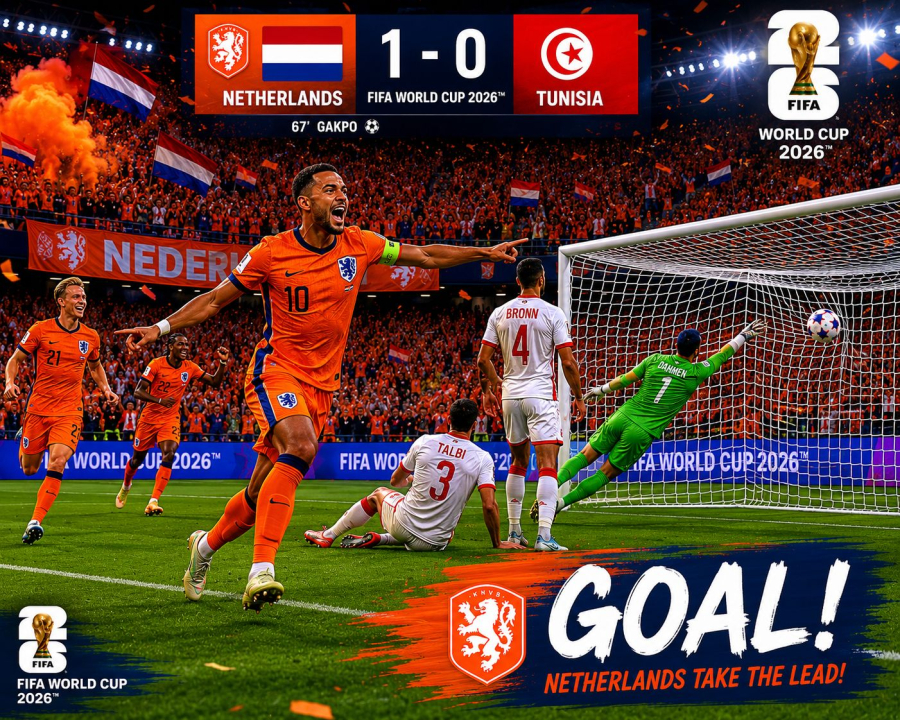
Start With the Match Reality: What This Game Usually Looks Like
Against top-tier nations, Tunisia have often been at their best when they can keep games tight: defending in a compact block, forcing play wide, and waiting for transition moments or dead-ball situations to tilt the odds. For the Netherlands, the opportunity is clear: make the game “long” for Tunisia by stretching their shape, sustaining pressure, and turning sterile possession into decisive actions in the box.
The tactical aim is not just to dominate the ball. It is to create a match where:
- the Netherlands generate multiple high-probability chances (cutbacks, close-range finishes, and set-piece headers);
- Tunisia’s counterattacks are limited to low-value shots or are stopped early;
- the Dutch can raise or lower tempo on demand, protecting a lead without inviting pressure.
The Winning Identity: Controlled Aggression
The Netherlands’ most reliable “tournament football” approach is controlled aggression: patient enough to avoid needless turnovers, aggressive enough to keep Tunisia pinned back and mentally under constant strain.
That means committing to:
- High-quality possession (possession that moves defenders and breaks lines, not just circulates);
- Fast regains (pressing and counter-pressing to prevent Tunisia from turning defense into attack);
- Relentless box pressure (more touches in the penalty area, more cutbacks, more second-ball shots);
- Set-piece edge (tournaments reward teams that treat dead balls like a core attacking phase).
In Possession: How the Netherlands Should Break Tunisia Down
1) Stretch the Block First, Then Penetrate
Compact defending becomes far more fragile when it has to defend both the width and the half-spaces. The Netherlands should prioritize a structure that keeps maximum width and creates interior overloads.
Key benefits of this approach:
- It forces Tunisia’s wide midfielders to make exhausting choices: help the fullback or protect the half-space.
- It creates “late arriving” shooting lanes at the top of the box, especially after cutbacks.
- It increases the odds of defensive errors, because compact blocks hate repeated side-to-side shifts followed by quick vertical actions.
Practical cues:
- Keep wingers high and wide to pin fullbacks.
- Use an attacking midfielder (or a dropping forward) to receive between the lines.
- Encourage one fullback to provide width while the other can invert (depending on personnel), creating a stable rest-defense behind the ball.
2) Make Cutbacks the Primary Chance-Creation Tool
Against teams that defend deep, crosses into a set defense can become low-value unless the crossing is carefully selected. A higher-percentage plan is to generate cutbacks from the byline or inside the box, which often produce shots from central zones.
How to engineer more cutbacks:
- Use quick combinations to release a runner down the outside, then drive to the byline.
- Create underlaps (inside runs) so defenders can’t just shepherd play wide.
- Occupy the box with at least three lanes: near-post run, penalty spot runner, and far-post presence, plus a fourth player for the cutback zone at the edge of the area.
The payoff is simple: cutbacks transform possession into clean looks rather than hopeful deliveries.
3) Use Third-Man Runs to Beat the “Wall”
Compact teams often allow passes in front of them but protect the space behind. The Netherlands can crack this with third-man patterns: Player A passes to Player B, and Player C runs beyond the line to receive the next pass.
This is especially effective in the half-spaces because it:
- pulls a Tunisian midfielder out of position;
- forces center-backs to step, which opens lanes behind them;
- creates moments where a through ball arrives before the block can reset.
To maximize the effect, the Netherlands should rehearse a small number of repeatable patterns rather than improvising every attack.
4) Switch Play With Purpose (Not as a Habit)
Switches of play are useful when they arrive after you have attracted pressure. Tunisia’s compactness is hardest to beat when the ball moves slowly and predictably. The Netherlands should bait Tunisia to shift to one side, then switch quickly to attack the far-side fullback before help arrives.
Best practices:
- Use one or two quick passes to “load” a flank, then a longer diagonal to the opposite winger.
- On the far side, attack immediately: drive inside, slip an underlap, or create a cutback.
- Avoid switching simply to recycle; every switch should aim to produce a 2v1 or isolate a defender.
5) Keep a Strong Rest-Defense to Eliminate Counters
One of the biggest benefits of organized possession is that it can be a defensive weapon. Tunisia’s best moments can come when opponents over-commit and lose structure behind the ball.
A strong rest-defense means:
- At least two defenders and a screening midfielder positioned to stop the first counter pass.
- Spacing that prevents a single clearance from turning into a sprinting duel.
- Immediate pressure on the ball after a loss (counter-press) so Tunisia can’t lift their head.
This is how the Netherlands can sustain attacks without giving Tunisia the “one moment” they need to make a tight game uncomfortable.
Out of Possession: Press Tunisia Where It Hurts
1) Press With Triggers, Not Constant Chaos
Non-stop pressing can backfire in tournament football if it becomes disorganized. The Netherlands should use clear pressing triggers that produce regains in advanced areas while keeping the back line protected.
Effective pressing triggers to target:
- A backward pass to the goalkeeper or center-back under pressure.
- A lateral pass to a fullback receiving on the sideline.
- A poor first touch or bouncing ball in Tunisia’s defensive third.
- A pass played into a marked midfielder with their back to goal.
When the trigger happens, the press must be collective: the nearest player presses the ball, teammates lock passing lanes, and the back line squeezes space. The benefit is twofold: more turnovers close to goal and fewer open-field counters.
2) Force Tunisia Wide, Then Win the Second Ball
If Tunisia try to bypass pressure, they may go longer and look for wide outlets. The Netherlands can prepare to win these moments by:
- angling the press to push play toward the touchline;
- positioning midfielders to collect second balls;
- immediately attacking after regaining, before Tunisia’s block reforms.
In tight matches, second-ball dominance is an underrated advantage because it quietly creates waves of pressure and wears down defensive concentration.
3) Keep Discipline Against Transition Runs
Even when Tunisia have limited possession, a single clean transition can change a match. The Netherlands should protect the center first:
- Maintain compactness between midfield and defense.
- Avoid diving in during defensive transitions; delay and force Tunisia to play sideways.
- Use tactical stopping actions early (within the laws of the game) to prevent a full-speed break.
The best outcome is to make Tunisia’s counters end with either a reset pass or a low-probability shot from distance.
Transition Moments: Where Tournament Matches Are Won
1) After Losing the Ball: A 5-Second Counter-Press Rule
When the Netherlands lose possession in the final third, the first five seconds are critical. A hard, coordinated counter-press can:
- win the ball back immediately;
- force rushed clearances that become new Dutch attacks;
- prevent Tunisia from finding their outlet runner.
The coaching detail that matters: assign roles. One player presses the ball, one blocks the inside pass, and one screens the forward pass. This structure turns “effort” into repeatable results.
2) After Winning the Ball: Attack Before Tunisia Sets
When Tunisia are organized, they are difficult to break down. When they are not organized, they are far more vulnerable. The Netherlands should attack quickly on regains with:
- a direct pass into the half-space;
- a fast carry at the backpedaling defenders;
- an early slip pass to a runner beyond the fullback.
Even if the immediate attack does not produce a shot, it can win territory and corners, which feeds directly into a set-piece advantage.
Set Pieces: Build a Real Edge (Because It’s One of the Fastest Paths to Goals)
World Cup games frequently turn on corners and free kicks. The Netherlands should treat set pieces as a core phase, not an afterthought, because the upside is huge: a single well-designed routine can break a low block without needing open-play perfection.
Attacking corners: simple principles that scale
- Variety: mix inswingers and outswingers, near-post flicks and far-post overloads.
- Traffic: use screens and crossing runs (within the rules) to disrupt Tunisia’s marking.
- Second balls: keep two players positioned to recycle and shoot if the clearance drops to the edge.
Defending set pieces: remove Tunisia’s best “steal a goal” route
- Assign clear matchups for aerial threats and protect the goalkeeper’s space.
- Hold a strong line and avoid needless fouls in crossing distance.
- Be ready for short-corner variations designed to pull markers out and create a late cross.
The benefit of set-piece excellence is psychological as well: Tunisia will feel that every corner against them is dangerous, and every corner for them is unlikely to pay off.
A Tactical Blueprint That Fits Multiple Formations
The Netherlands can implement these ideas in different shapes depending on the squad and opponent scouting. The key is the principles, not the diagram.
Option A: 4-3-3 for width, pressure, and box occupation
- Wingers stay wide to stretch the back line.
- One midfielder pushes between lines; the others balance and protect transitions.
- Fullbacks choose moments to overlap or invert to stabilize rest-defense.
Option B: 3-4-2-1 (or 3-4-3) for rest-defense and sustained pressure
- Three center-backs provide strong protection against counters.
- Wing-backs create width and crossing/cutback platforms.
- Two attacking midfielders occupy half-spaces to combine and shoot.
Both options can win the same game. The selection should be based on which shape best produces clean cutbacks while keeping counter protection strong.
Opponent Management: The Tunisia Threat Map and Dutch Responses
| Tunisia strength or plan | What it looks like in-game | Netherlands tactical response | Benefit for the Netherlands |
|---|---|---|---|
| Compact mid-to-low block | Few central lanes, forced wide circulation | Width + half-space overloads + cutbacks | Creates higher-quality chances from central zones |
| Counterattacks after turnovers | Quick vertical pass to runners, wide outlet | Strong rest-defense + 5-second counter-press | Reduces Tunisia’s best “moment” to score |
| Physical defending in the box | Clears crosses, blocks shots | Prioritize byline entries and cutbacks over hopeful crosses | More shots from 10–14 meters, fewer blocked headers |
| Set-piece danger | Dead-ball deliveries, second-ball scrambles | Discipline (avoid fouls) + clear marking roles | Prevents a low-possession equalizer |
| Time management when level | Slower restarts, broken rhythm | Fast restarts, sustained pressure, early shots after regains | Keeps momentum and increases volume of chances |
Game Management: How to Turn Control Into a Scoreline
1) Scoreboard Strategy: Push for an Early “Reward Goal”
Against a disciplined opponent, the first goal changes everything. The Netherlands should aim for a high-intensity first 20–30 minutes with:
- aggressive pressing triggers;
- more runs beyond the line (not just passes in front);
- quick entries into the box to win corners and rebounds.
An early goal forces Tunisia to open up, which creates bigger spaces for Dutch combination play and transition attacks.
2) If It’s 0-0 Late: Avoid Forcing It, Increase Precision
In a level game, frustration is the real opponent. The Netherlands should keep belief high by adjusting how they attack, not by abandoning structure.
High-impact late-game levers:
- Fresh width: introduce a direct wide player to increase 1v1 threat.
- More half-space shooting: encourage edge-of-box shots off cutbacks if Tunisia collapse deep.
- Set-piece emphasis: win corners through byline pressure rather than speculative crosses.
- One extra runner into the box while keeping rest-defense intact.
3) If Leading: Keep the Ball, But Stay Vertical Enough to Threaten
Protecting a lead does not mean inviting pressure. The best lead protection is to keep Tunisia defending by:
- maintaining possession with purpose;
- still attacking space when Tunisia step out;
- using smart fouls sparingly and only when necessary to stop transitions.
The result is a match where Tunisia feel they are always one pass away from being stretched again.
Training Priorities That Translate Directly to Matchday Benefits
If the Netherlands want this plan to work in a World Cup environment, training should focus on repeatable actions rather than theoretical concepts.
Priority 1: Automated chance creation
- Wing release patterns into cutbacks (byline entries from both sides).
- Third-man runs in half-spaces to break compact lines.
- Box occupation timing: near-post, penalty spot, far-post, and cutback zone.
Priority 2: Counter-press structure
- Who presses, who covers inside, who screens the forward pass.
- Distances between lines so the press is connected, not scattered.
Priority 3: Set-piece package
- Two to three corner routines that are simple, reliable, and hard to scout.
- Clear defensive assignments to eliminate confusion under pressure.
Simple Matchday Checklist for the Netherlands
- Width on the ball, half-space presence off the ball.
- Cutbacks over hopeful crosses, unless the box is clearly overloaded.
- Press on triggers, not randomly.
- Rest-defense always set before committing extra numbers.
- Attack after regains before Tunisia reset.
- Set pieces treated like a scoring phase, not a pause in play.
Why This Plan Works: The Compounding Benefits
This approach is designed to create a compounding advantage across 90 minutes:
- More sustained pressure creates more corners and second balls.
- More corners and second balls increase scoring probability without needing perfect open play.
- Strong rest-defense reduces Tunisia’s counter threat, which allows the Netherlands to keep attacking confidently.
- An early or well-earned goal forces Tunisia to take more risks, opening the exact spaces the Netherlands want to exploit.
If the Netherlands execute with discipline and intensity, the match tilts toward a Dutch win not through hope, but through repeatable, high-value actions that tournament football consistently rewards.
Final Takeaway
To beat Tunisia in a potential World Cup 2026 matchup, the Netherlands should aim for a clear, modern tournament blueprint: stretch the block, manufacture cutbacks, press with triggers, protect transitions with strong rest-defense, and win the set-piece battle. It is a plan that turns control into goals, reduces risk, and gives the Netherlands multiple ways to win even if the game stays tight for long stretches.
