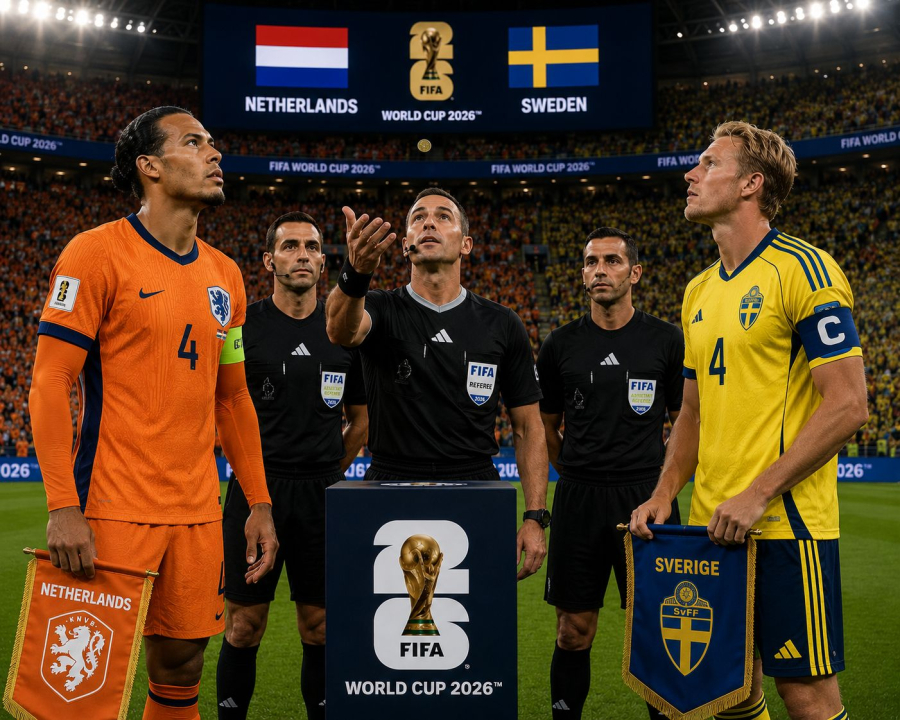
A World Cup group match often comes down to a few repeatable advantages: depth across positions, tactical clarity, game control, and the ability to turn dominance into goals without losing defensive stability. In a Netherlands vs Sweden showdown at the 2026 World Cup group stage, the Netherlands are widely viewed as well-positioned to win because they tend to combine those elements better than most international teams.
This preview focuses on what typically drives Netherlands success in tournament football, why those strengths translate especially well to a group-game setting, and the match dynamics that could tilt the result in their favor. The goal here is not to predict an exact scoreline, but to explain why the Netherlands profile is built to earn three points.
Why group-stage games reward the Netherlands’ style
Group matches are different from knockout football. There is less time to “grow into” a tournament, and results can hinge on small margins like goal difference, late-game management, and the ability to avoid unnecessary chaos.
The Netherlands are often at their best in this environment because they tend to bring:
- Structured possession that reduces volatility and limits opponents’ transition chances.
- Consistent chance creation through wide play, overloads, and coordinated movement between lines.
- Bench depth that helps maintain intensity and tactical discipline for 90 minutes.
- Tournament know-how from generations of high-stakes international experience.
When a team can control tempo and territory while still carrying a real threat in the final third, it forces opponents to defend for longer stretches. Over a group game, that typically increases the probability of getting the first goal, which is often the pivotal moment in a match between two well-organized sides.
Netherlands vs Sweden: a quick tournament pedigree snapshot
Both countries have proud football histories, but the Netherlands have more frequent recent appearances near the business end of major tournaments, which matters in a World Cup setting where margins are tight.
| Category | Netherlands | Sweden |
|---|---|---|
| Best World Cup finish | Runners-up (1974, 1978, 2010) | Runners-up (1958) |
| Other notable World Cup highs | 3rd place (2014) | 3rd place (1994) |
| Modern-era tournament identity | Technical, proactive, possession-led with tactical flexibility | Organized, resilient, often strong in duels and transitions |
Sweden are absolutely capable of delivering elite performances, especially when they can keep games close and leverage physicality, set pieces, and defensive structure. Still, the Netherlands’ modern profile more consistently aligns with what wins group games: control, depth, and repeatable attacking patterns.
Key advantage #1: A deeper, more versatile talent pool
International football can punish teams that rely on one approach or a narrow set of match-winners. The Netherlands have a long-standing advantage here: they typically produce high-level players across multiple roles, allowing them to adjust to the opponent and to the game state.
That depth tends to show up in three practical ways:
- Flexible attacking shapes that can switch between a possession-heavy build and a faster, more direct phase when space appears.
- Multiple goal pathways, including wide combinations, cutbacks, late runs, and set-piece threats.
- In-game problem solving through substitutions that preserve structure while changing the matchup dynamics.
Against a disciplined opponent like Sweden, this matters. If the early plan is slowed down, the Netherlands are often better equipped to change the rhythm without losing their defensive balance.
Key advantage #2: Tactical identity built for control
The Netherlands are closely associated with tactical education, positional play concepts, and coordinated pressing. In practice, that identity supports a simple group-stage objective: spend more time in the opponent’s half than they spend in yours, and make the match feel like it is being played on your terms.
What “control” looks like in a World Cup group match
- Clean build-up to avoid cheap turnovers in central areas.
- Spacing between the lines that offers passing options while reducing counterattack exposure.
- Pressure after loss to win the ball back quickly and keep Sweden defending.
- Patience in possession to move a compact block and wait for high-quality openings.
This doesn’t mean the Netherlands will dominate every minute, or that Sweden will not have dangerous moments. It means the Netherlands are generally more likely to dictate where the game is played and how often each team is forced into low-percentage situations.
Key advantage #3: Defensive stability without sacrificing ambition
In tournament football, defensive organization is often the foundation of a successful group stage. The Netherlands’ best versions typically defend in a way that supports their attack, rather than forcing them to play cautiously.
That balance can be a deciding edge versus Sweden because Sweden often look to capitalize on:
- Transitions after turnovers
- Wide deliveries and second balls
- Set pieces and aerial duels
The Netherlands, when well-drilled, can address those threats through spacing, rest defense (the positions held behind the ball during attacks), and smart foul and risk management. The benefit is straightforward: they can push for the opening goal without exposing themselves to the kind of single-pass counterattack that flips a group game.
Key advantage #4: More ways to create high-quality chances
When two organized teams meet, the side with more reliable chance creation usually wins. The Netherlands often have an edge because their attacking toolkit tends to include several repeatable patterns.
Common Netherlands chance-creation routes that translate well to group games
- Wide overloads that free a runner for a cutback into the box.
- Third-man runs that move defenders out of shape and open central lanes.
- Switches of play to attack the far side before the defensive block can shift.
- Shots and rebounds generated through sustained pressure near the penalty area.
- Set-piece variety, including rehearsed routines and second-phase pressure.
Sweden’s defensive structure can be extremely difficult to break down. The Netherlands’ advantage is that they can keep producing “good enough” looks across 90 minutes rather than relying on a single moment of brilliance.
Why the matchup favors the Netherlands’ tempo and rhythm
One of the most practical reasons the Netherlands are well-positioned is the likely rhythm of the game. Sweden are often comfortable in matches that are:
- Physically intense
- Low-scoring
- Defined by duels, territory swings, and set pieces
The Netherlands, by contrast, generally prefer a match defined by:
- Ball circulation and structured attacks
- Controlled pressing and counter-pressing
- Long stretches in the opponent’s half
In a group-stage context, the team that can impose its preferred rhythm often gains an additional advantage: it forces the opponent to play more minutes in an uncomfortable mode, which can lead to fatigue, late errors, and reduced counterattacking sharpness.
What a Netherlands “winning script” can look like
Matches are rarely linear, but if you map out a realistic path to a Netherlands win, it often follows a recognizable script. Here is a plausible, tournament-typical blueprint that fits their strengths.
Phase 1: Establish territory and minimize risk
- Secure early possession to settle the team.
- Avoid central giveaways that trigger Sweden transitions.
- Pin Sweden deeper through patient, wide progression.
Phase 2: Increase tempo in the final third
- Attack the half-spaces to pull Sweden’s midfield line out of shape.
- Create crossing and cutback opportunities rather than low-percentage shots.
- Force corners and free kicks to increase scoring probability.
Phase 3: Protect the lead with structure, not retreat
- Keep possession phases to reduce the number of Sweden attacks.
- Press selectively to prevent easy deliveries into the box.
- Use substitutions to maintain intensity and aerial security.
This “winning script” is important because it is repeatable. In a World Cup group, repeatability is a major asset: it reduces reliance on randomness and helps a team secure the kind of professional result that advances them comfortably.
Where the Netherlands can generate the biggest edge
Even among strong teams, some matchup zones tend to be decisive. The Netherlands can create the clearest advantage in areas that combine technical execution and collective movement.
1) Between Sweden’s midfield and defensive lines
If the Netherlands can receive and turn in the space between the lines, Sweden’s compactness starts to stretch. That is where quick combinations, layoffs, and third-man runs can lead to high-quality chances.
2) Wide progression to cutbacks
Against teams that defend deep and centrally, cutbacks are often more dangerous than floated crosses. Sustained wide pressure can create the angle for a low ball back into the box, forcing defenders to face their own goal.
3) Second balls and sustained pressure
Group games frequently turn on sequences: not just the first attack, but what happens after the block, clearance, or rebound. The Netherlands’ ability to keep the ball in advanced zones increases the number of chances per match, which tends to favor the stronger chance-creation team over 90 minutes.
Why this is a strong “three points” opportunity in a group
World Cup groups are often decided by a combination of points and goal difference. A team that can win without conceding, or win with control, puts itself in a powerful position for qualification.
The Netherlands are well-suited to that objective because they can:
- Start fast without playing recklessly.
- Manage leads with possession and structure.
- Avoid low-percentage chaos that invites late equalizers.
- Stay effective across match states, whether the game is level, they are ahead, or they need a goal.
For fans and analysts, that translates into a compelling expectation: if the Netherlands execute their plan at a normal level, they have multiple routes to victory.
Netherlands strengths that tend to show up at the World Cup
It is one thing to have talented players; it is another to translate talent into tournament wins. The Netherlands’ historical identity and modern football infrastructure help them do that more reliably than many teams.
Development and tactical education
The Netherlands are known for strong coaching education and a football culture that prioritizes technical quality, spatial awareness, and tactical understanding. In tournament conditions, that can pay off when teams have limited time to prepare and must adapt quickly to opponents.
Comfort under pressure
In a World Cup group match, a single mistake can shift the entire group picture. Teams that remain composed, protect the ball, and keep making good decisions late in matches often outperform teams that rely on emotion and momentum alone.
Clarity of roles
International sides typically have less training time than club teams. Clear role definitions help players perform immediately and reduce the kinds of miscommunications that lead to goals conceded.
How Sweden can be dangerous (and why the Netherlands still have the edge)
Sweden’s best path in matches like this is usually to keep the game close, win key duels, and maximize high-leverage moments such as set pieces or transitions. That approach can absolutely work in a single game.
The reason the Netherlands remain well-positioned, however, is that they can address those danger zones while still creating more attacking volume. In other words, the Netherlands do not need a perfect match to win; they often just need to be slightly better across the game’s repeatable actions:
- More time in the attacking third
- More controlled entries into the box
- Fewer transition opportunities conceded
- Better late-game game management
In group-stage football, that “slightly better across many possessions” profile is frequently the difference between a 1–0 or 2–0 win and a frustrating draw.
Keys to a Netherlands win: a practical checklist
If you are looking for the most important on-field markers that typically correlate with a Netherlands victory over a disciplined opponent, this is the short list.
- Score first or at least sustain pressure long enough to force Sweden into deeper defending.
- Limit set-piece concessions in dangerous wide areas and avoid unnecessary fouls.
- Keep rest defense intact so Sweden cannot counter into open central spaces.
- Prioritize cutbacks and high-quality shots rather than predictable, hopeful crossing.
- Use substitutions to maintain intensity, especially to protect the final 20 minutes.
When the Netherlands hit most of these checkpoints, they are difficult to stop in a group match because they combine attacking purpose with defensive responsibility.
What this matchup can mean for Netherlands momentum in the group
Group stages are as much about momentum as mathematics. A strong performance against Sweden can deliver three compounding benefits for the Netherlands:
- Table leverage: three points reduce pressure in subsequent matches.
- Game-state confidence: executing a controlled win reinforces the team’s identity.
- Squad management options: a positive points position can allow smarter rotation later in the group.
That is why this kind of fixture can be pivotal. It is not only about one result; it is about shaping the group narrative in a way that supports a longer tournament run.
Bottom line: why the Netherlands are well-positioned
The Netherlands enter a Netherlands vs Sweden World Cup group game with a profile that fits what wins at this stage: depth, tactical structure, control of tempo, and multiple reliable ways to generate chances. Sweden can make the match demanding, physical, and tight, but the Netherlands’ ability to impose rhythm and solve problems in-game gives them the edge.
If the Netherlands execute with normal tournament discipline, they are well-positioned to do what successful World Cup teams do in the group stage: take control, create enough high-quality moments to score, and manage the match to a professional victory.
