The Netherlands don’t need a miracle to lift the 2026 FIFA World Cup trophy. They need their strengths to peak at the right time — and there are plenty of reasons to believe that’s realistic. From a world-class development pipeline and tactical versatility to a squad structure that can handle tournament pressure, the Oranje have the ingredients of a champion.
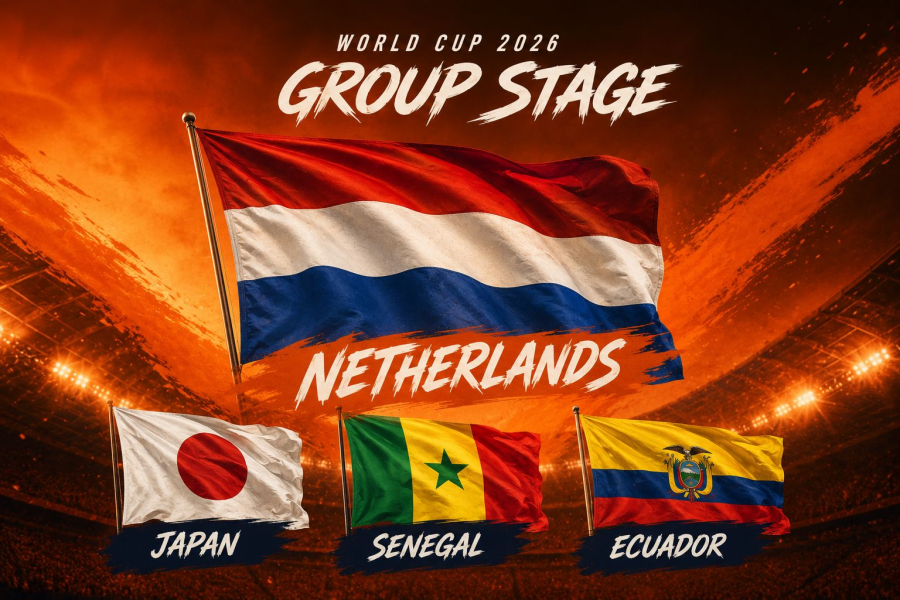
Winning a World Cup is never guaranteed, especially in a competition where form, fitness, and fine margins decide everything. But if you’re looking for a national team that can combine elite-level structure with match-winning talent, the Netherlands belong firmly in the conversation for 2026.
A squad profile built for tournament football
World Cups are not league seasons. You don’t win them by being “pretty good” every week; you win by being difficult to beat, efficient in both boxes, and adaptable to different opponents over a short period. Historically, the Netherlands tend to produce squads that fit that profile — and the current era looks especially promising.
Defensive leadership and elite organization
Successful World Cup teams almost always have a defensive core that travels well: leadership, aerial dominance, calm distribution under pressure, and the discipline to manage knockout-game chaos. The Netherlands have frequently been defined by strong central defenders, and they continue to feature top-level options at center-back and in goalkeeping roles.
Even when the Oranje aren’t dominating possession, a well-drilled Dutch side can protect the penalty area, handle transitions, and keep games within reach — exactly the kind of reliability that turns tight knockout matches into wins.
Midfield balance: control plus ball progression
To win a World Cup, you need a midfield that can do two jobs at once:
- Control matches with composure and pressing intelligence.
- Progress the ball through pressure and into dangerous zones.
The Netherlands’ best recent teams have leaned into midfielders who can receive under pressure, break lines with passing or carrying, and still contribute defensively. That balance is vital in 2026 because the tournament includes more teams and potentially a wider variety of game states: deep blocks, high presses, transitional opponents, and everything in between.
A modern attacking mix: pace, finishing, and creativity
World Cup winners usually have multiple ways to score: structured build-up, set pieces, transition attacks, and moments of individual brilliance. The Netherlands can realistically check several of those boxes, especially with a generation of attackers and attacking midfielders who offer:
- Direct running to stretch defenses.
- Combination play in tight areas.
- Long-range shooting and late box arrivals.
- Set-piece threat via height and delivery quality.
In a tournament setting, that variety matters. When an opponent takes away your Plan A, you need a Plan B that still produces high-quality chances.
The Netherlands’ biggest competitive advantage: player development
When people talk about Dutch football, they often go straight to historical identity: positional play, technical quality, and tactical education. Those ideas aren’t just nostalgia. They are still rooted in an ecosystem that routinely produces top-level professionals.
A culture of tactical education
One of the Netherlands’ enduring strengths is how early players are exposed to tactical principles — spacing, pressing triggers, building from the back, and role flexibility. That matters at the World Cup because preparation time is limited. Teams that share a baseline footballing “language” can execute complex game plans faster.
In practical terms, that means:
- Defenders comfortable stepping into midfield.
- Midfielders able to rotate and cover without losing structure.
- Attackers who understand pressing and counter-pressing responsibilities.
Those traits can be the difference between surviving a difficult group-stage match and gaining momentum that carries into the knockout rounds.
A pipeline that reduces reliance on one superstar
World Cup champions often feature iconic stars, but they also rely on squad depth: reliable starters, high-upside young players, and specialists who can change a match off the bench. The Netherlands are well-positioned here because their talent production tends to deliver waves of quality across multiple positions.
That depth becomes especially valuable in 2026 because the World Cup’s expanded format can increase the importance of rotation, in-game management, and impact substitutes. Teams with strong second units can maintain intensity while others fade.
Tactical flexibility: a key ingredient for a seven-game run
To win the World Cup, you rarely play the same match twice. You might face a low block one day and a high press the next. You might need to protect a lead in one knockout game and chase a goal in the next. The Netherlands have a long tradition of tactical adaptability, and modern Dutch squads are typically built to switch systems without losing identity.
Multiple credible shapes
The Netherlands have frequently used systems that maximize their defensive strengths and wing or wing-back dynamics, while also being comfortable in more conventional back-four setups. That matters because shape is not just a diagram; it affects:
- Rest defense (how you prevent counterattacks while attacking).
- Build-up patterns (how you progress out of pressure).
- Pressing structure (how you win the ball back).
A team that can shift between shapes within a match can exploit opponent weaknesses, manage momentum, and reduce predictability.
Game management and tournament pragmatism
Winning tournaments often requires a pragmatic edge: knowing when to slow the game, when to take fewer risks, and when to maximize set pieces. The Netherlands have demonstrated in past tournaments that they can marry strong principles with practical decision-making.
In 2026, that blend could be decisive. As matches tighten in the knockout rounds, efficiency becomes a superpower.
Big-match experience: the Netherlands have been here before
The Netherlands have a deep World Cup history and have repeatedly proven they can navigate the pressure of elite tournaments. They reached the World Cup final in 1974, 1978, and 2010, and finished third in 2014. Those achievements don’t win 2026 by themselves, but they reflect a national program accustomed to high expectations.
Why that experience matters in 2026
In a World Cup, belief is not a slogan — it’s a performance factor. Teams that expect to win can remain calmer in decisive moments: late-game defending, penalty shootouts, and high-pressure finishing chances.
The Oranje brand carries weight, and that can translate into:
- Confidence under pressure when matches swing quickly.
- Composure in hostile environments or against heavyweight opponents.
- Leadership across the pitch when momentum turns.
Why 2026 could be a particularly good fit for the Netherlands
The 2026 World Cup will be hosted across the United States, Canada, and Mexico and will feature an expanded field of teams. That creates a different tournament rhythm compared to previous editions.
Depth and rotation become even more valuable
In an expanded tournament, there can be more variance in opponents’ styles and potentially a heavier emphasis on managing energy and squad health over the full run. Teams that can rotate without losing quality are better equipped to sustain intensity and sharpness.
The Netherlands’ ability to produce tournament-ready players — and to integrate young talent alongside experienced leaders — is a genuine advantage in that context.
Set pieces and “small edges” can decide everything
Late-stage World Cup matches are often decided by:
- One set-piece goal.
- One transition moment.
- One defensive lapse (or one defensive recovery).
The Netherlands have the physical profiles and technical delivery to be dangerous on dead balls, while also having the tactical schooling to defend them well. When games become tight and tense, those small edges are often the separating line between semifinalists and champions.
Players who can define the tournament (without relying on a single savior)
World Cup winners typically feature headline stars, but they also benefit from a broader cast of match-winners. The Netherlands can realistically bring a balanced mix of leadership, control, and explosiveness into 2026.
Depending on form and selection closer to the tournament, the Netherlands could lean on:
- Established leaders who organize, set standards, and manage high-pressure moments.
- Midfield controllers who dictate tempo and resist pressing.
- Dynamic attackers who can score from transitions, create separation 1v1, or unlock compact defenses.
- Impact substitutes who change games with pace, shooting, or physicality late on.
The key benefit of this structure is resilience. If one player is tightly marked or has a quiet game, the team still has multiple other routes to a winning moment.
A clear identity that can travel
At the World Cup, teams often struggle when their club-based habits don’t translate to international football. The Netherlands’ traditional emphasis on technique and structure tends to translate well because it is rooted in fundamentals: spacing, decision-making, and coordinated movement.
What “travels” in international football
- Compactness without panic: defending space intelligently instead of only reacting.
- Pressing cues: knowing when to jump and when to hold shape.
- Clean build-up options: playing through pressure rather than around it every time.
- Role flexibility: players comfortable adapting within a match.
The Netherlands’ football education system frequently produces exactly these traits, which is why Dutch teams can look cohesive even with limited preparation time.
How the Netherlands can win: a practical blueprint
Championship talk becomes more convincing when it’s tied to a realistic path. Here is a practical blueprint for how the Netherlands can put together a title-winning run in 2026.
1) Start fast in the group stage
Group-stage momentum matters. A strong start can reduce pressure, allow rotation, and set a positive tone. For the Netherlands, early success often comes from:
- Structured possession that avoids unnecessary turnovers.
- Early set-piece dominance to tilt close matches.
- Disciplined rest defense to prevent counterattacks.
2) Stay flexible in the knockouts
Knockout matches can demand different approaches. The Netherlands can win multiple ways if they embrace:
- Control mode against opponents who want to counter.
- Transition mode against opponents who push high.
- Game-state management when leading late (smart substitutions, tempo control, and defensive organization).
3) Turn set pieces into a consistent scoring channel
Set pieces are one of the most repeatable ways to generate goals in tournament football. With the right delivery and movement, they provide a steady stream of high-leverage chances. For the Netherlands, this can be a defining advantage, especially in matches where open-play chances are scarce.
4) Use depth to win the final 30 minutes
Many World Cup matches swing late — when legs tire, concentration drops, and one substitution changes the rhythm. A deep Dutch squad can aim to:
- Increase tempo with fresh wide players.
- Add an extra runner in midfield to overload the box.
- Protect leads with fresh defenders and smart possession outlets.
Strengths that typically separate champions from contenders
The easiest way to see the Netherlands’ title potential is to map their strengths to what wins tournaments. This is what a champion profile looks like in practical terms.
| Championship Trait | Why It Matters at the World Cup | How The Netherlands Can Benefit |
|---|---|---|
| Defensive leadership | Keeps games tight and survivable in the knockouts | Organized structure and experienced leaders reduce chaos |
| Midfield control | Manages tempo, limits opponent momentum, creates sustained pressure | Technical, tactically educated midfielders can dictate phases |
| Multiple scoring routes | Prevents reliance on one plan or one star | Combination play, transitions, and set pieces can all produce goals |
| Tactical flexibility | Allows adaptation to opponent styles across seven matches | Comfort in different shapes and match states supports consistency |
| Squad depth | Enables rotation and late-game impact | A strong pipeline supports quality beyond the starting XI |
What a winning Dutch World Cup story could look like in 2026
Every champion has a storyline, but the best storylines are built on repeatable strengths. A realistic Dutch title narrative in 2026 would likely include:
- A composed group stage with clean sheets or low concession rates and multiple scorers.
- A signature knockout performance where tactical flexibility outsmarts a top opponent.
- Set-piece influence delivering crucial goals when open play is locked down.
- Depth-driven wins with substitutes contributing late in matches.
- Leaders delivering in pressure moments— the kind that define semifinals and finals.
This is not wishful thinking; it’s a tournament blueprint that aligns with what the Netherlands have historically done well and what modern World Cups tend to reward.
Bottom line: the Netherlands have a champion’s toolkit
The Netherlands can win the 2026 World Cup because they combine three elements that rarely show up together at the same time: a strong tactical identity, a steady supply of elite-level talent, and a squad profile that fits the realities of tournament football.
If the Oranje arrive with key players healthy, a settled approach, and the confidence to adapt as the tournament evolves, they have every reason to believe 2026 can be the year the Netherlands finally turn “contenders” into “champions.”
